Understanding Electronic Miscellaneous Documents (EMDs) in Modern Airline Ticketing
The airline industry has evolved far beyond traditional flight tickets. These changes include the introduction of various types of EMDs (Electronic Miscellaneous Documents) to handle the purchase of additional services. Today, passengers purchase a wide range of additional services such as extra baggage, preferred seating, lounge access, upgrades, onboard services, and change fees.
To manage these non-ticket services efficiently, airlines use a system known as the Electronic Miscellaneous Document (EMD).
For students learning air ticketing, GDS systems, airline reservations, and travel operations, understanding the Types of EMDs is an important part of professional aviation training.
In this guide, we’ll explain what EMDs are, why airlines use them, and the two major types of EMDs used across the global aviation industry.
What Is an EMD?
An Electronic Miscellaneous Document (EMD) is an electronic record used by airlines to collect payment for services that are not included in the base airfare.
Instead of issuing paper documents, airlines can digitally record and manage ancillary services through EMDs.
Common Services Issued Through EMDs
| Airline Service | EMD Usage |
|---|---|
| Extra Baggage | Payment collection |
| Preferred Seats | Service documentation |
| Flight Upgrades | Additional service tracking |
| Change Fees | Administrative charges |
| Lounge Access | Premium service management |
| Special Requests | Ancillary service recording |
EMDs have become a standard part of modern airline retailing.
Why Airlines Use EMDs
Before EMDs, airlines often used different systems to manage additional services, which created operational complexity.
EMDs provide a standardized way to document non-ticket products.
Benefits of EMDs
| Benefit | Airline Advantage |
|---|---|
| Digital Processing | Faster service delivery |
| Centralized Records | Better management |
| Service Tracking | Improved accuracy |
| Revenue Monitoring | Better reporting |
| Customer Convenience | Enhanced travel experience |
Today, most major airlines rely on EMD technology to manage ancillary revenue streams.
The Two Main Types of EMDs
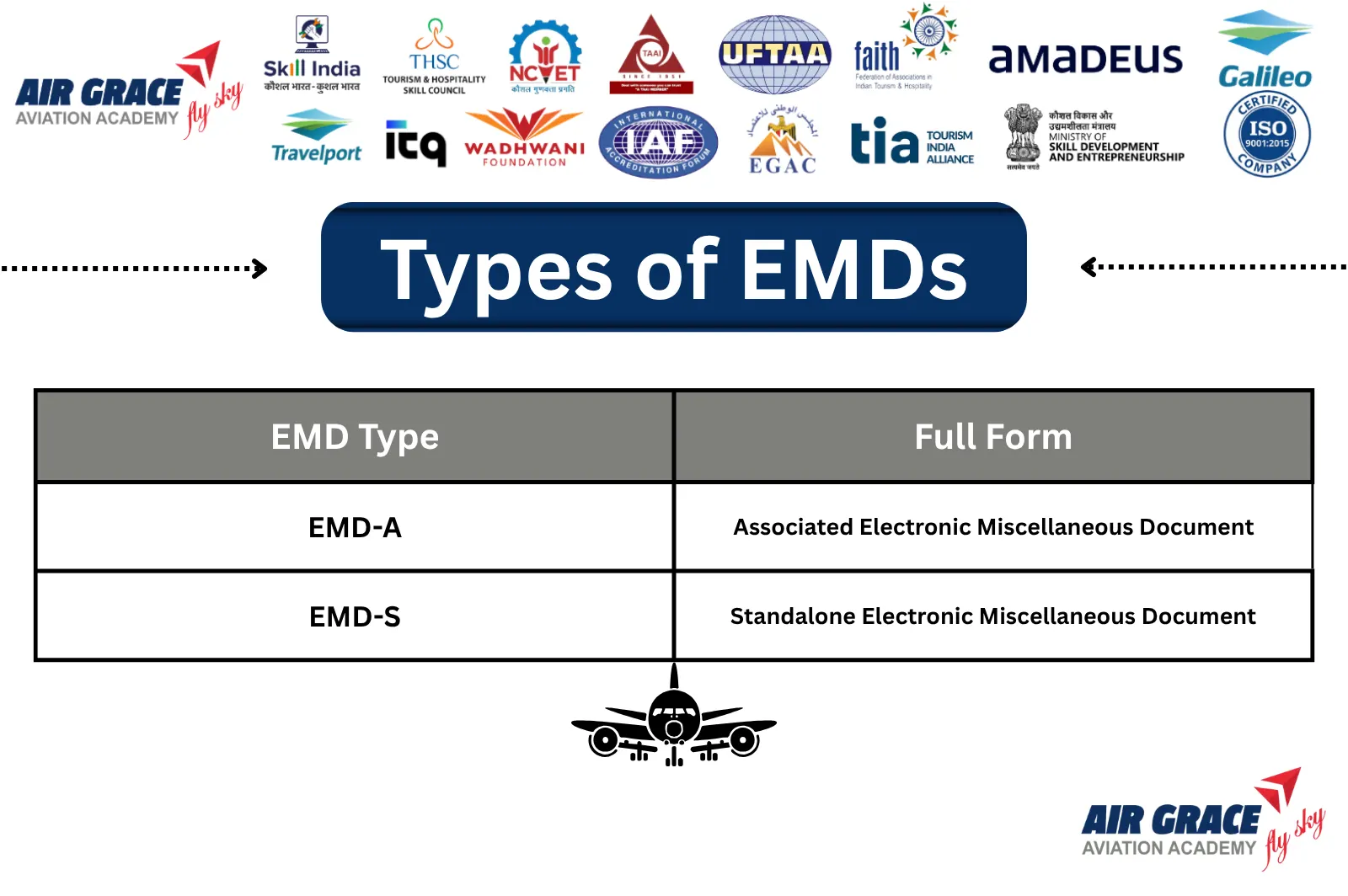
In airline ticketing, EMDs are generally divided into two categories.
Overview
| EMD Type | Full Form |
|---|---|
| EMD-A | Associated Electronic Miscellaneous Document |
| EMD-S | Standalone Electronic Miscellaneous Document |
Understanding the difference between these two types is essential for ticketing professionals.
What Is EMD-A (Associated EMD)?
EMD-A is directly linked to a flight coupon within a passenger’s itinerary.
This means the service purchased is connected to a specific flight segment.
Examples of EMD-A Usage
| Service | Why EMD-A Is Used |
|---|---|
| Extra Checked Baggage | Linked to flight |
| Preferred Seating | Assigned to itinerary |
| Cabin Upgrade | Connected to travel segment |
| Sports Equipment | Flight-specific service |
Since these services depend on a booked flight, the EMD remains associated with that reservation.
Key Characteristics of EMD-A
How EMD-A Works
| Feature | Description |
|---|---|
| Flight Connection | Required |
| Linked to Ticket | Yes |
| Service Dependency | Flight-related |
| Travel Segment Association | Mandatory |
| Common Airline Usage | Very High |
Most ancillary airline services fall under the EMD-A category.
What Is EMD-S (Standalone EMD)?
EMD-S operates independently and is not directly associated with a flight coupon.
The service can exist separately from a specific flight segment.
Examples of EMD-S Usage
| Service | Why EMD-S Is Used |
|---|---|
| Lounge Membership | Independent service |
| Travel Vouchers | Standalone value |
| Service Fees | Not tied to a flight |
| Ground Services | Separate transaction |
These services can often be processed without direct attachment to a flight itinerary.
Key Characteristics of EMD-S
How EMD-S Works
| Feature | Description |
|---|---|
| Flight Association | Not Required |
| Ticket Dependency | Independent |
| Service Flexibility | High |
| Standalone Usage | Yes |
| Administrative Functions | Common |
EMD-S provides airlines with greater flexibility for non-flight-related products.
EMD-A vs EMD-S: Quick Comparison
One of the most common interview questions in air ticketing is the difference between EMD-A and EMD-S.
Comparison Table
| Factor | EMD-A | EMD-S |
|---|---|---|
| Linked to Flight | Yes | No |
| Associated with Ticket Coupon | Yes | No |
| Flight-Specific Service | Yes | Usually No |
| Independent Usage | Limited | Yes |
| Typical Use Case | Baggage, Seats | Vouchers, Fees |
Understanding this distinction is important for airline reservation professionals.
Why EMD Knowledge Matters for Air Ticketing Students
Many beginners focus only on reservations and ticket issuance.
However, airlines increasingly generate revenue from ancillary services.
Industry Relevance
| Aviation Function | EMD Knowledge Importance |
|---|---|
| Air Ticketing | High |
| Airline Reservations | High |
| Customer Service | High |
| Airport Operations | Moderate |
| Travel Consultancy | Moderate |
Students who understand EMDs often develop a broader understanding of airline operations.
EMDs and the Future of Airline Retailing
The aviation industry is moving toward a more customer-focused retail model.
Passengers now purchase customized travel experiences rather than just flight tickets.
Growing Ancillary Services
| Service Category | Market Trend |
|---|---|
| Extra Baggage | Increasing |
| Seat Selection | Growing |
| Lounge Services | Expanding |
| Premium Upgrades | Strong Demand |
| Travel Add-ons | Rapid Growth |
As these services expand, EMDs continue to play a crucial role in airline operations.
Learn Advanced Air Ticketing Concepts at Air Grace Aviation Academy
Understanding concepts such as EMDs, fare rules, airline documentation, reservations, and ticketing systems can help students build stronger aviation knowledge.
At Air Grace Aviation Academy, students are introduced to industry-relevant concepts that prepare them for modern travel and airline operations.
What Students Learn
✔ Air Ticketing Fundamentals
✔ International Ticketing Concepts
✔ Airline Documentation
✔ GDS System Exposure
✔ Reservation Procedures
✔ Aviation Industry Knowledge
✔ Interview Preparation
✔ Placement Assistance
Why Delhi NCR Students Choose Air Grace Aviation Academy
Students from Connaught Place, Rajiv Chowk, Janpath, Barakhamba Road, Karol Bagh, Janakpuri, Dwarka, Laxmi Nagar, Noida, Ghaziabad, Gurgaon, Faridabad, and nearby areas choose Air Grace Aviation Academy for industry-focused aviation training.
Contact Air Grace Aviation Academy
📞 Call Now: 085274 46364
🌐 Website: www.airgraceacademy.com
Fill the form below to book Your Free Career Counseling Session!
✈ Learn Airline Ticketing Concepts Beyond Basic Reservations
✈ Understand Industry Terminology Used by Airlines
✈ Develop Professional Aviation Knowledge
✈ Prepare for Travel & Aviation Careers
Admissions Open – Start Your Aviation Journey Today!
Frequently Asked Questions
What does EMD stand for in aviation?
EMD stands for Electronic Miscellaneous Document, a digital document used to record and manage airline ancillary services.
How many types of EMDs are there?
There are two main types: EMD-A (Associated EMD) and EMD-S (Standalone EMD).
What is EMD-A used for?
EMD-A is used for services directly linked to a flight segment, such as baggage, seat selection, and upgrades.
What is EMD-S used for?
EMD-S is used for services that are not directly connected to a flight coupon, such as vouchers or certain service fees.
Why is EMD important in airline ticketing?
EMDs help airlines manage additional services digitally, improve operational efficiency, and track ancillary revenue.

Related posts
IATA GoLite vs GoStandard
Understanding the Difference Between IATA GoLite and GoStandard Accreditation Travel agencies looking to become IATA-accr …
How to Learn Amadeus
A Beginner’s Roadmap to Becoming an Airline Reservation Professional If you want to know how to learn Amadeus as p …