The travel and tourism industry is one of the fastest-growing sectors in the world, creating countless opportunities for entrepreneurs, travel consultants, and aspiring business owners. If you are interested in launching your own agency, this Travel Agency Business Guide will provide essential information. As domestic and international travel continues to grow, the demand for professional travel agencies offering flight bookings, holiday packages, visa assistance, hotel reservations, and travel management services has increased significantly.
If you’ve ever wondered how to start a travel agency business, this comprehensive Travel Agency Business Guide will help you understand every stage of building and growing a successful travel business.
Whether you want to open a small home-based travel agency, launch an online travel business, or establish a full-service travel company with IATA accreditation, this guide covers everything you need to know.
You’ll learn:
- What a travel agency is.
- How travel agencies work.
- Different types of travel agencies.
- The travel agency business model.
- How travel agencies earn money.
- Step-by-step process to start a travel agency in India.
- Required registrations and licenses.
- Essential software and GDS systems.
- Marketing strategies for business growth.
- Career opportunities in the travel industry.
By the end of this guide, you’ll have a clear roadmap for starting and scaling a profitable travel agency business in India.
Why Start a Travel Agency Business in 2026?
The travel industry has evolved rapidly over the last decade. Today, travelers expect personalized experiences, competitive pricing, and expert guidance, creating opportunities for professional travel agencies that can provide value beyond simple online bookings.
Several factors make 2026 an excellent time to enter the travel business:
- Growing demand for domestic and international travel.
- Increasing preference for customized travel experiences.
- Rising demand for visa assistance and documentation services.
- Expansion of business travel and corporate travel management.
- Growth of religious, medical, educational, and luxury tourism.
- Greater adoption of online booking platforms and digital payments.
With the right knowledge, technology, and customer service, a travel agency can generate recurring revenue from multiple travel-related services.
What Is a Travel Agency?
A travel agency is a business that helps individuals, families, corporations, and organizations plan, book, and manage travel arrangements.
Travel agencies act as intermediaries between customers and travel service providers such as:
- Airlines
- Hotels
- Cruise companies
- Tour operators
- Car rental companies
- Travel insurance providers
- Visa service providers
Instead of contacting each provider individually, travelers can rely on a travel agency to organize every aspect of their journey efficiently.
Modern travel agencies also provide professional advice on destinations, travel documentation, travel insurance, and itinerary planning.
How Does a Travel Agency Work?
A travel agency connects travelers with travel suppliers using advanced reservation systems and industry partnerships.
The basic workflow includes:
- Understanding the customer’s travel requirements.
- Searching available flights and travel options.
- Comparing fares and itineraries.
- Booking airline tickets and accommodations.
- Arranging visa assistance where required.
- Processing payments.
- Issuing travel documents.
- Providing after-sales support, including changes, cancellations, and refunds.
Most professional travel agencies use Global Distribution Systems (GDS) such as Amadeus, Galileo, and Sabre to access real-time airline inventory, hotel availability, and travel services.
Why Do People Still Use Travel Agencies?
Many people assume online booking platforms have replaced travel agencies. In reality, travel agencies continue to play an important role because they offer expertise, personalized service, and support that automated booking engines cannot always provide.
Customers choose travel agencies because they receive:
- Professional travel advice.
- Customized holiday packages.
- Better itinerary planning.
- Corporate travel management.
- Visa guidance.
- Emergency travel support.
- Group travel arrangements.
- Assistance with cancellations and refunds.
- Time-saving travel solutions.
Businesses, educational institutions, and organizations also rely on travel agencies for managing complex travel requirements.
Types of Travel Agencies
Understanding different business models helps you choose the right direction for your travel agency.
1. Retail Travel Agency
Retail travel agencies work directly with customers and provide travel services such as:
- Flight bookings
- Hotel reservations
- Holiday packages
- Travel insurance
- Visa assistance
This is the most common travel agency model in India.
2. Online Travel Agency (OTA)
Online Travel Agencies operate primarily through websites and mobile applications.
Popular OTAs allow customers to search, compare, and book travel services online without visiting a physical office.
Many entrepreneurs now combine an online presence with personalized customer support.
3. Corporate Travel Agency
Corporate travel agencies manage business travel for companies.
Services include:
- Flight reservations
- Hotel bookings
- Meeting and conference travel
- Employee travel policies
- Expense management
Corporate clients often provide repeat business, making this segment attractive for long-term growth.
4. Tour Operator
Tour operators design and sell complete travel packages.
These packages may include:
- Flights
- Hotels
- Local transportation
- Sightseeing
- Tour guides
- Meals
- Activities
Tour operators either sell directly to travelers or through travel agencies.
5. Specialized Travel Agency
Some agencies focus on specific travel segments such as:
- Luxury Travel
- Adventure Tourism
- Religious Tourism
- Medical Tourism
- Educational Tours
- Honeymoon Packages
- Wildlife Tours
- Cruise Holidays
- Destination Weddings
Specialization allows agencies to build expertise and attract targeted customers.
Travel Agency Business Model
A travel agency earns revenue by connecting travelers with travel suppliers while adding value through planning, expertise, and customer support.
Unlike traditional retail businesses, travel agencies usually do not manufacture products. Instead, they earn income by selling travel-related services.
The most common revenue streams include:
- Airline ticket bookings.
- Hotel reservations.
- Holiday packages.
- Cruise bookings.
- Travel insurance.
- Visa assistance.
- Passport support services.
- Foreign exchange assistance (where permitted).
- Corporate travel management.
- Service fees.
- Consultation charges.
A successful travel agency typically offers multiple services instead of relying on a single source of income.
How Do Travel Agencies Earn Money?
One of the most common questions asked by aspiring entrepreneurs is:
“How do travel agencies make money?”
Travel agencies generate revenue through various channels.
Airline Ticket Booking
Agencies earn service fees, incentives, commissions (where applicable), and productivity-based rewards from airline bookings.
Hotel Reservations
Many hotels offer commissions to travel partners for confirmed bookings.
Holiday Packages
Package tours generally provide higher profit margins than standalone airline tickets.
Visa Assistance
Many agencies charge professional service fees for visa documentation and application support.
Travel Insurance
Selling travel insurance generates additional revenue while providing value to customers.
Corporate Travel Services
Managing travel for businesses often leads to recurring monthly revenue and long-term client relationships.
Service Charges
Many travel agencies charge consultation or booking fees for itinerary planning, ticket modifications, and premium customer support.
Skills Required to Start a Travel Agency
Running a successful travel agency requires more than just booking airline tickets. Entrepreneurs should develop a combination of technical knowledge and customer service skills.
Important skills include:
- Communication skills.
- Customer relationship management.
- Sales and negotiation.
- Air ticketing knowledge.
- Airline reservation systems.
- Fare calculation.
- Destination knowledge.
- Visa documentation.
- Time management.
- Problem-solving.
- Digital marketing.
- Computer proficiency.
Investing in professional training before launching your business can significantly improve your confidence and operational efficiency.
Is the Travel Agency Business Profitable?
Yes, a travel agency can be profitable when managed effectively.
Profitability depends on several factors, including:
- Service quality.
- Customer retention.
- Product diversification.
- Corporate partnerships.
- Marketing strategy.
- Operational efficiency.
- Supplier relationships.
Agencies that provide value-added services rather than competing only on price often achieve better long-term growth.
Additionally, repeat customers and referrals can become major sources of business, reducing customer acquisition costs over time.
How to Start a Travel Agency Business in India: Step-by-Step Guide
Starting a travel agency requires careful planning, the right business setup, industry knowledge, and strong supplier relationships. Whether you’re opening a small home-based agency or planning to build a full-scale travel company, following a structured approach will increase your chances of long-term success.
Let’s explore the complete process step by step.
Step 1: Choose Your Travel Agency Business Model
The first decision is selecting the type of travel agency you want to establish.
Your business model determines your investment, office requirements, target customers, and services.
Common travel agency business models include:
Home-Based Travel Agency
Ideal for beginners with limited investment.
Benefits include:
- Low startup costs
- Flexible working hours
- No commercial office rent
- Easy online operations
Retail Travel Agency
A physical office where customers can visit for travel consultations.
Suitable for:
- Local customers
- Walk-in bookings
- Holiday package sales
- Visa services
Online Travel Agency (OTA)
Operate through a professional website and digital marketing.
Services include:
- Flight booking
- Hotel booking
- Tour packages
- Travel insurance
- Visa assistance
This model offers nationwide business opportunities without geographical limitations.
Corporate Travel Agency
Focus on business travel management for companies.
Services include:
- Employee travel
- Corporate flight booking
- Hotel reservations
- Meeting and conference travel
- Expense reporting
Corporate clients often generate recurring monthly revenue.
Step 2: Research Your Target Market
Before investing money, identify your ideal customers.
Ask yourself:
- Will you focus on domestic travel?
- International travel?
- Religious tourism?
- Student travel?
- Corporate travel?
- Visa services?
- Luxury holidays?
- Honeymoon packages?
- Group tours?
Understanding your target audience helps you design better services and marketing strategies.
Step 3: Prepare a Travel Agency Business Plan
A business plan acts as the roadmap for your travel agency.
Your business plan should include:
- Business objectives
- Target audience
- Services offered
- Competitor analysis
- Marketing strategy
- Startup investment
- Expected revenue
- Monthly expenses
- Growth plan
Planning reduces business risks and helps attract investors or financial institutions if needed.
Step 4: Register Your Business
Registering your travel agency builds trust and ensures legal compliance.
Common business structures in India include:
- Sole Proprietorship
- Partnership Firm
- Limited Liability Partnership (LLP)
- Private Limited Company
- One Person Company (OPC)
The right structure depends on your investment, ownership, and long-term business goals.
Professional legal or accounting advice can help you choose the most suitable option.
Step 5: Apply for GST Registration
If your business meets the applicable threshold or if you require GST registration for operational or commercial reasons, obtain a GST registration.
GST registration offers benefits such as:
- Business credibility
- Input tax credit eligibility (where applicable)
- Easier corporate transactions
- Compliance with tax regulations
Always consult the latest GST rules or a qualified tax professional to determine your registration requirements.
Step 6: Open a Business Bank Account
Keep personal and business finances separate.
A dedicated business account helps you:
- Track income
- Monitor expenses
- Manage taxes
- Build financial credibility
- Accept online payments professionally
Digital payment options such as UPI, NEFT, RTGS, credit cards, and payment gateways should also be integrated into your business operations.
Step 7: Set Up Your Office
Your office reflects your professionalism.
You can choose between:
Home Office
Suitable for startups with limited investment.
Requirements include:
- Laptop/Desktop
- High-speed internet
- Printer
- Scanner
- Professional workspace
Commercial Office
Suitable for agencies expecting walk-in customers.
Consider:
- Prime location
- Good accessibility
- Comfortable seating
- Branding
- Meeting space
- Reliable internet connectivity
A professional office enhances customer confidence.
Step 8: Purchase Essential Equipment
Basic infrastructure includes:
- Desktop or Laptop
- High-Speed Internet
- Printer
- Scanner
- UPS/Power Backup
- Office Furniture
- Business Telephone
- CRM Software
- Accounting Software
Reliable technology improves efficiency and customer service.
Step 9: Learn Airline Reservation Systems (GDS)
A professional travel agency should understand Global Distribution Systems (GDS).
These platforms allow travel professionals to:
- Search flights
- Compare fares
- Book airline tickets
- Reserve hotel rooms
- Book car rentals
- Issue tickets
- Process refunds
- Reissue tickets
The three leading GDS platforms are:
Amadeus GDS
One of the most widely used reservation systems in the world.
Features include:
- Flight reservations
- Hotel bookings
- Fare calculation
- Ticket issuance
- Travel management
Galileo GDS
Galileo connects travel agencies with airlines, hotels, and other travel suppliers through the Travelport network.
Sabre GDS
Sabre provides advanced airline reservation capabilities and is widely used by travel agencies globally.
Learning these systems significantly improves employability and business efficiency.
Step 10: Build Relationships with Travel Suppliers
A successful travel agency depends on strong supplier partnerships.
Important suppliers include:
- Airlines
- Hotels
- Tour operators
- Cruise companies
- Car rental providers
- Travel insurance companies
- Visa consultants
- Destination Management Companies (DMCs)
Reliable suppliers help you provide competitive pricing and dependable service.
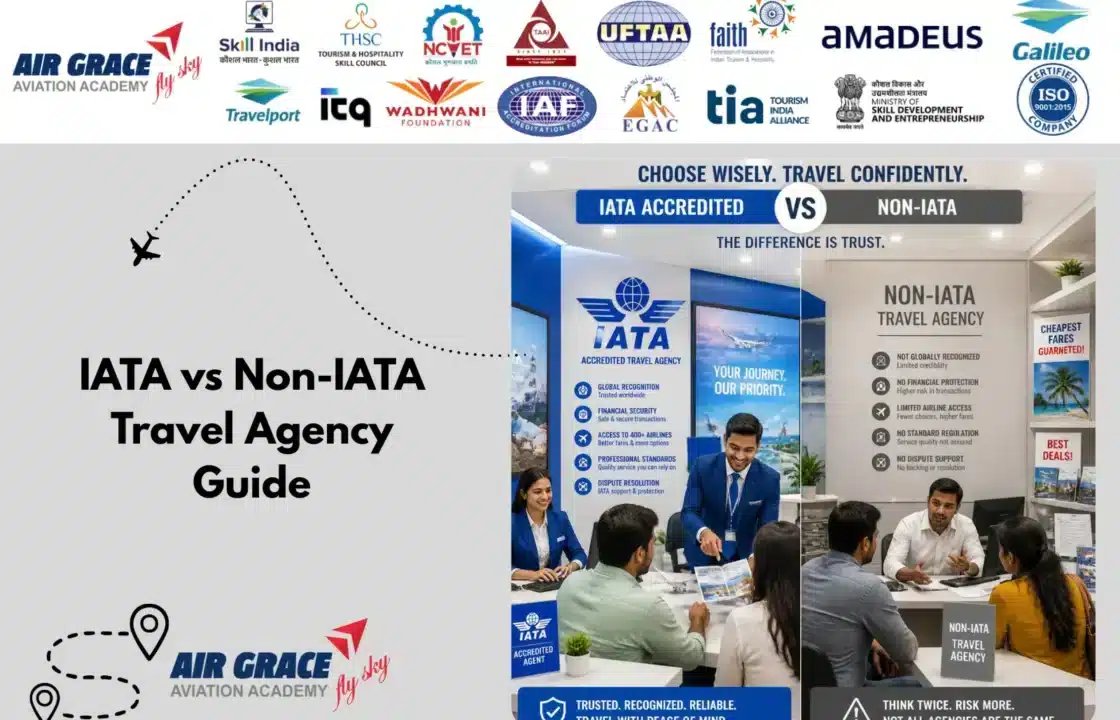
Step 11: Understand IATA Accreditation
As your travel agency grows, you may consider obtaining IATA (International Air Transport Association) Accreditation.
IATA Accreditation enables eligible agencies to work more directly with participating airlines and strengthens industry credibility.
Some common accreditation pathways include:
- IATA GoLite
- IATA GoStandard
- IATA GoGlobal
The appropriate option depends on your agency’s business model, operational requirements, and eligibility.
Before applying, ensure you understand the current IATA requirements, financial criteria, and documentation process.
Why Is IATA Accreditation Important?
An IATA-accredited travel agency can benefit from:
- Increased industry recognition
- Greater customer trust
- Access to a global travel network
- Professional business opportunities
- Improved relationships within the airline ecosystem
For many growing travel businesses, IATA Accreditation is an important milestone.
Step 12: Create a Professional Travel Agency Website
Today, your website acts as your digital office.
A professional website should include:
- Home Page
- About Us
- Flight Booking Services
- Holiday Packages
- Visa Assistance
- Hotel Booking
- Contact Page
- Blog
- Customer Reviews
- Enquiry Forms
Your website should also be:
- Mobile-friendly
- Fast-loading
- Secure (HTTPS)
- SEO-optimized
- Easy to navigate
Publishing informative blog content can also improve your visibility in search engines.
Step 13: Develop Your Service Portfolio
Rather than offering only flight tickets, build a complete range of travel services.
Popular services include:
Air Ticket Booking
Domestic and international flight reservations.
Hotel Reservations
Accommodation booking for business and leisure travelers.
Holiday Packages
Customized domestic and international tours.
Visa Assistance
Guidance on documentation and visa application processes.
Travel Insurance
Protection against unexpected travel-related situations.
Passport Assistance
Support with passport applications and renewals where legally permissible.
Corporate Travel Management
Business travel planning for companies.
Group Tours
Educational tours, family trips, corporate outings, and religious travel.
Offering multiple services increases revenue opportunities and improves customer retention.
Step 14: Estimate Your Startup Investment
The investment required depends on your business model.
Typical expense categories include:
| Expense | Estimated Requirement |
|---|---|
| Business Registration | Initial setup cost |
| Office Setup | Depends on location |
| Computer & Equipment | Basic infrastructure |
| Internet & Utilities | Monthly operating cost |
| Website Development | Professional website |
| Digital Marketing | Customer acquisition |
| GDS Training | Professional skill development |
| Branding | Logo, stationery, signage |
| Working Capital | Day-to-day operations |
Your actual investment will vary based on the size and scale of your agency.
Common Challenges Faced by New Travel Agencies
Every business faces challenges in its early stages.
Common issues include:
- Building customer trust
- Competing with large online booking platforms
- Managing seasonal demand
- Handling airline schedule changes
- Understanding fare rules
- Maintaining cash flow
- Generating consistent leads
- Keeping up with changing travel regulations
The agencies that focus on service quality, customer relationships, and continuous learning are better positioned for long-term success.
How to Market Your Travel Agency Business Successfully
Starting a travel agency is only the beginning. To build a successful business, you need a consistent flow of enquiries and loyal customers. In today’s digital world, effective marketing plays a crucial role in attracting travelers and growing your brand.
Whether your agency is based in Delhi, Mumbai, Bengaluru, Hyderabad, or any other city in India, the right marketing strategy can help you compete with both local agencies and large online travel platforms.
1. Build a Strong Brand Identity
Your travel agency should have a professional and memorable brand identity.
This includes:
- Business name
- Professional logo
- Brand colours
- Business email
- Website
- Social media profiles
- Business cards
- Company brochure
A consistent brand helps customers recognize and trust your business.
2. Create an SEO-Optimized Website
Your website is often the first impression customers have of your business.
Include dedicated pages for:
- Flight Booking
- Hotel Booking
- Holiday Packages
- Visa Assistance
- Corporate Travel
- Travel Insurance
- Contact Us
- About Us
- Blog
Ensure your website is:
- Mobile responsive
- Fast loading
- HTTPS secure
- Easy to navigate
- Optimized for Core Web Vitals
Regularly publishing helpful travel content can improve your visibility on Google and attract organic traffic.
3. Optimize Your Google Business Profile
If you serve customers locally, a Google Business Profile is one of the most effective ways to appear in local search results.
Complete your profile with:
- Business name
- Address
- Phone number
- Website
- Working hours
- Service areas
- Business categories
- Photos
- Customer reviews
Encourage satisfied customers to leave genuine reviews, as they can improve credibility and local visibility.
4. Use Content Marketing to Build Authority
Helpful content attracts visitors and builds trust over time.
Some blog ideas include:
- How to Book Cheap Flights
- Visa Guide for Popular Destinations
- Travel Checklist for International Trips
- Best Time to Visit Dubai
- Travel Agency vs Online Booking
- Flight Booking Process Step by Step
- Airport Codes List
- Beginner’s Guide to Air Ticketing
High-quality content can bring long-term organic traffic from search engines.
5. Leverage Social Media
Social media helps you connect with potential customers and showcase your services.
Consider sharing:
- Travel tips
- Destination highlights
- Customer testimonials
- Visa updates
- Holiday offers
- Behind-the-scenes content
- Travel reels and short videos
Consistency is more important than posting large volumes of content.
6. Build an Email Marketing List
Email marketing remains an effective way to stay connected with customers.
You can send:
- Seasonal offers
- New tour packages
- Travel advisories
- Visa updates
- Festival promotions
- Loyalty rewards
Always obtain permission before sending promotional emails and follow applicable regulations.
7. Use WhatsApp for Customer Communication
Many customers prefer quick communication through messaging apps.
Use WhatsApp professionally to:
- Share itineraries
- Send quotations
- Confirm bookings
- Provide travel updates
- Answer customer queries
Respond promptly and maintain clear, professional communication.
8. Run Digital Advertising Campaigns
Paid advertising can help generate enquiries while your organic presence grows.
Popular channels include:
- Google Ads
- Meta (Facebook & Instagram) Ads
- YouTube Ads
Focus on targeted campaigns that match your services and target locations.
Common Mistakes to Avoid When Starting a Travel Agency
Many new travel agencies struggle because of avoidable mistakes.
Avoid these common pitfalls:
Focusing Only on Flight Tickets
Relying solely on airline tickets limits your revenue potential. Offer additional services such as hotels, holiday packages, visa assistance, travel insurance, and corporate travel.
Ignoring Customer Service
Excellent customer support encourages repeat business and referrals.
Not Learning Industry Software
Professional knowledge of reservation systems such as Amadeus, Galileo, or Sabre improves efficiency and credibility.
Depending Only on Paid Advertising
Paid ads can generate leads quickly, but long-term growth also depends on SEO, referrals, and repeat customers.
Not Maintaining an Online Presence
Customers expect to find accurate business information online. Keep your website and business profiles updated.
Future Scope of the Travel Agency Business
The travel industry continues to evolve with changing customer expectations and technology.
Growing opportunities include:
- Sustainable tourism
- Luxury travel
- Medical tourism
- Educational travel
- Religious tourism
- Cruise vacations
- Corporate travel management
- Destination weddings
- Adventure tourism
- Personalized travel planning
Agencies that embrace technology while delivering personalized service are well-positioned for long-term success.
Frequently Asked Questions (FAQs)
Is the travel agency business profitable in India?
Yes. A travel agency can be profitable when it offers multiple services, delivers excellent customer service, and builds long-term customer relationships.
How much investment is required to start a travel agency?
The investment varies depending on your business model. A home-based agency generally requires less investment than a commercial office with multiple employees.
Do I need IATA accreditation to start a travel agency?
No. Many agencies begin operations before obtaining IATA accreditation. As the business grows and meets the required eligibility criteria, they may choose to apply for an appropriate IATA accreditation option.
Which software is used by travel agencies?
Professional travel agencies commonly use Global Distribution Systems such as:
- Amadeus
- Galileo
- Sabre
Many agencies also use CRM, accounting, and booking management software.
Can I start a travel agency after completing Class 12?
Yes. Many people begin careers in travel and tourism after Class 12 by gaining professional training in air ticketing, GDS, and travel operations before starting their own agency or working in the industry.
Can I run a travel agency from home?
Yes. Many entrepreneurs successfully operate home-based travel agencies using online communication tools, reservation systems, and digital marketing.
Which services generate the highest revenue?
Revenue depends on your business model, but many agencies generate income from a combination of flight bookings, holiday packages, hotel reservations, visa assistance, corporate travel, and service fees.
Conclusion
The travel industry offers tremendous opportunities for entrepreneurs who are willing to invest in knowledge, technology, and customer service. Starting a travel agency is no longer limited to large businesses with significant capital. With the right planning, professional training, and a customer-focused approach, even a small agency can build a strong reputation and achieve sustainable growth.
Success in this industry depends on understanding airline reservations, travel regulations, Global Distribution Systems (GDS), destination knowledge, and effective marketing. Equally important is the ability to build trust, provide personalized service, and adapt to changing travel trends.
Whether your goal is to operate a home-based travel agency, establish a retail office, or develop an online travel business serving customers across India, following a structured business plan and continuously upgrading your skills will help you stay competitive.
The travel industry rewards agencies that focus on professionalism, reliability, and long-term customer relationships.
Start Your Travel Agency Journey with Air Grace Aviation Academy
If you’re planning to start a travel agency or build a successful career in the travel and tourism industry, having the right skills is the first step.
At Air Grace Aviation Academy, we provide industry-oriented training designed to prepare students, aspiring entrepreneurs, and working professionals for real-world travel operations.
Our Professional Training Programs
- Air Ticketing & Airline Reservation
- Amadeus GDS Training
- Galileo GDS Training
- Sabre GDS Training
- Travel & Tourism Management
- Visa Documentation & Processing
- IATA Foundation Concepts
- Customer Service & Travel Operations
We also provide guidance on travel agency operations and practical knowledge that helps learners understand how the industry works.
Why Choose Air Grace Aviation Academy?
- Industry-experienced trainers
- Practical training on GDS platforms
- Job-oriented curriculum
- Modern classroom environment in Delhi
- Interview preparation and career guidance
- Placement assistance for eligible students
- Support for learners aspiring to build careers in aviation and travel
Whether you want to work for an airline, join a travel company, or eventually establish your own travel agency, professional training can help you build a strong foundation.
Contact Air Grace Aviation Academy
📞 Phone: +91 85274 46364
🌐 Website: https://airgraceacademy.com/
📍 Location: Delhi, India
Fill the Form below to take the first step toward your travel industry career. Learn the skills, gain practical knowledge, and prepare for opportunities in airline reservation, air ticketing, and travel management.

Related posts
What is GDS? Complete Guide to the Global Distribution System in the Travel & Aviation Industry (2026)
What is GDS? If you have ever booked a flight through a travel agency, compared airline fares online, or wondered how tra …
How to Get a Travel Agency License in India (2026): Complete Registration & Legal Guide
How to Get a Travel Agency License in India Starting a travel agency in India is an exciting business opportunity. If you …