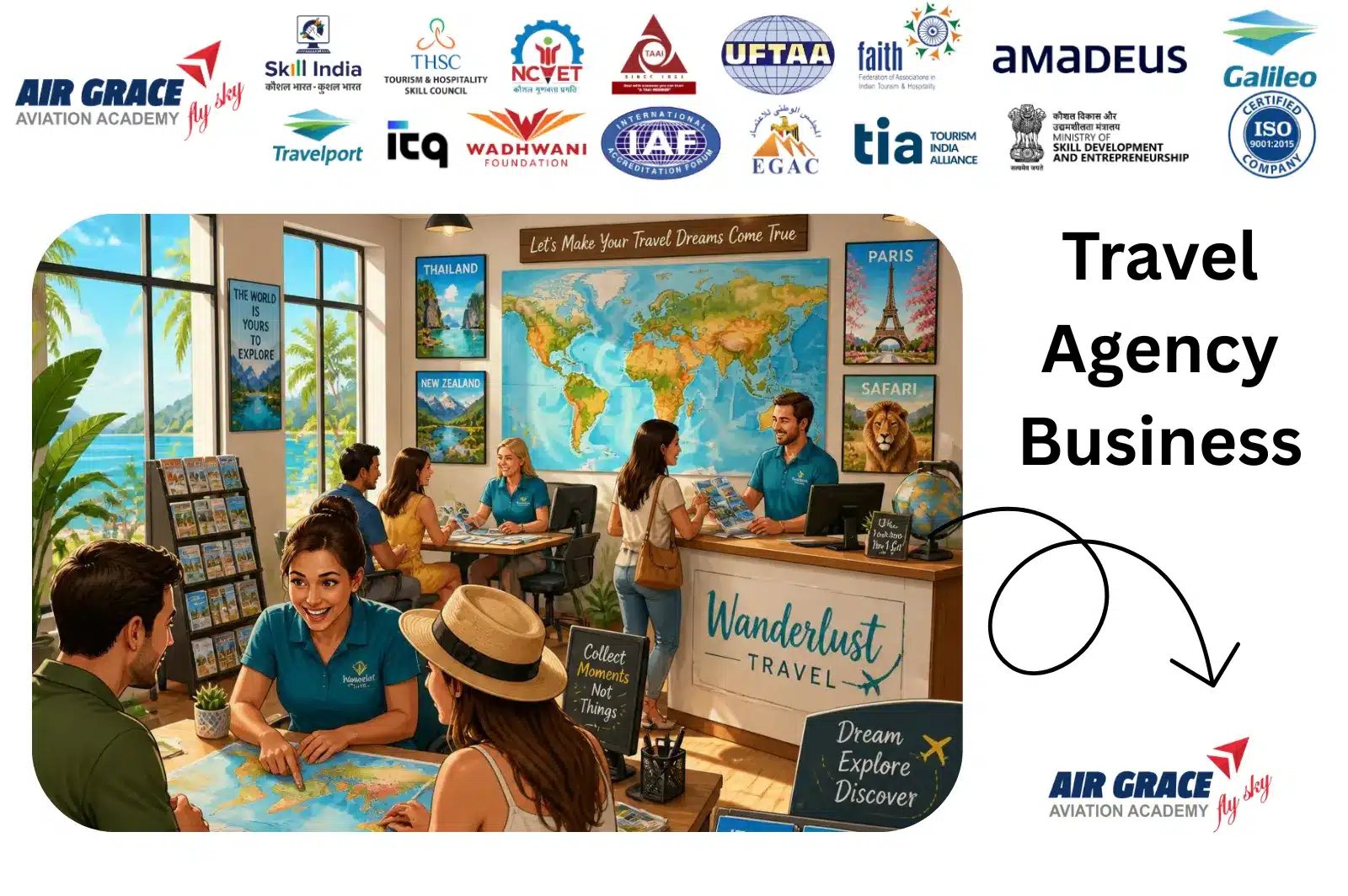
The travel agency business has transformed dramatically over the past decade. With millions of people traveling every year for holidays, business meetings, education, medical treatment, religious tourism, and international employment, the demand for professional travel services continues to grow. Although online booking platforms have made travel planning easier, customers still seek expert guidance for complex itineraries, international travel, visa documentation, corporate travel, and customized holiday experiences.
A travel agency is much more than a place where airline tickets are booked. Modern travel agencies provide complete travel solutions, including flight reservations, hotel bookings, visa assistance, travel insurance, holiday packages, cruises, destination management, corporate travel planning, and customer support throughout the journey.
For entrepreneurs, the travel industry offers exciting business opportunities with multiple revenue streams and long-term growth potential. For students and professionals, it provides rewarding career paths in airlines, travel companies, tourism organizations, and multinational travel management firms.
Whether you want to establish your own travel agency or build a career in the travel and tourism sector, understanding how the industry works is the first step toward success.
What is a Travel Agency Business?
A travel agency business is an organization that helps individuals, families, businesses, and institutions plan, book, and manage travel-related services. Acting as an intermediary between travelers and service providers, a travel agency simplifies the travel experience by bringing multiple services together in one place.
Instead of contacting airlines, hotels, transport companies, insurance providers, and visa consultants separately, customers can rely on a travel agency to coordinate every aspect of their journey.
A professional travel agency may assist with:
- Domestic and international flight bookings
- Hotel and resort reservations
- Holiday package planning
- Visa documentation assistance
- Passport guidance
- Travel insurance
- Airport transfers
- Cruise reservations
- Corporate travel management
- Educational tours
- Honeymoon packages
- Religious and pilgrimage tours
- Group travel arrangements
- Car rentals
- Foreign exchange guidance (where legally applicable)
The primary objective of a travel agency is to provide convenience, expert advice, competitive pricing, and dependable customer support before, during, and after travel.
Why the Travel Agency Business Continues to Grow
Many people assume that online booking websites have replaced travel agencies. In reality, the industry has evolved rather than disappeared. Professional travel consultants continue to add value by offering expertise, personalized recommendations, and support that automated booking systems cannot always provide.
Several factors contribute to the continued growth of the travel agency business.
Rising Domestic Tourism
India’s growing middle class, improved transportation infrastructure, and increasing disposable income have encouraged more people to explore destinations across the country. Weekend getaways, family vacations, pilgrimage tours, and adventure travel continue to drive demand for travel planning services.
Increasing International Travel
International travel has become more accessible due to expanded airline networks, competitive airfares, and simplified travel procedures for many destinations. Travelers often require assistance with visa requirements, international itineraries, insurance, and documentation, creating opportunities for professional travel agencies.
Growth of Corporate Travel
Businesses regularly arrange employee travel for meetings, conferences, exhibitions, training programs, and client visits. Corporate travel requires careful planning, policy compliance, expense management, and last-minute flexibility, making specialized travel agencies an essential partner.
Demand for Personalized Experiences
Today’s travelers seek customized experiences rather than standard travel packages. They want itineraries designed around their interests, budgets, and schedules. Travel agencies meet this demand by creating personalized travel plans that online booking engines cannot always replicate.
Expansion of Niche Tourism
Specialized travel segments continue to grow, including:
- Medical tourism
- Wellness tourism
- Adventure tourism
- Luxury travel
- Eco-tourism
- Wildlife tourism
- Culinary tourism
- Educational tours
- Spiritual and religious tourism
This diversification has created new opportunities for specialized travel businesses.
How Does a Travel Agency Work?
Understanding the workflow of a travel agency helps explain how multiple travel services come together to create a smooth customer experience.
Step 1: Customer Consultation
The process begins when a customer shares their travel requirements.
These may include:
- Destination
- Travel dates
- Budget
- Number of travelers
- Preferred airline
- Hotel preferences
- Visa requirements
- Special requests
The travel consultant analyzes these requirements before recommending suitable travel options.
Step 2: Research and Planning
Based on the customer’s needs, the consultant researches:
- Flight availability
- Hotel options
- Transportation
- Local attractions
- Visa requirements
- Weather conditions
- Travel advisories
- Budget-friendly alternatives
Proper planning ensures that customers receive the best possible itinerary.
Step 3: Reservation Process
Professional travel agencies use Global Distribution Systems (GDS) and supplier platforms to search and reserve travel services.
These systems allow consultants to:
- Compare airline schedules
- Check seat availability
- View fare rules
- Create Passenger Name Records (PNRs)
- Reserve hotels
- Book ancillary services
Technology has made reservations faster, more accurate, and more efficient.
Step 4: Travel Documentation
Once bookings are confirmed, the agency prepares:
- Flight tickets
- Hotel vouchers
- Travel itinerary
- Travel insurance documents
- Visa documentation guidance
- Invoice
- Payment receipts
Accurate documentation is critical for a hassle-free journey.
Step 5: Customer Support
Travel agencies continue supporting customers after the booking is complete.
Common post-booking services include:
- Flight changes
- Ticket reissues
- Cancellations
- Refund processing
- Emergency assistance
- Schedule updates
- Hotel modifications
This ongoing support is one of the biggest reasons travelers continue to choose professional agencies.
Types of Travel Agencies
The travel industry consists of several different business models. Choosing the right type depends on your investment, expertise, target audience, and long-term business goals.
Retail Travel Agencies
Retail travel agencies serve individual customers directly by providing complete travel planning services.
Typical services include:
- Flight bookings
- Hotel reservations
- Holiday packages
- Visa assistance
- Travel insurance
Retail agencies focus on building long-term customer relationships and repeat business.
Online Travel Agencies (OTAs)
Online Travel Agencies operate through websites and mobile applications, allowing customers to search, compare, and book travel services independently.
Features include:
- Real-time bookings
- Digital payments
- Instant confirmations
- Online customer support
OTAs rely heavily on technology and digital marketing to attract customers.
Corporate Travel Agencies
Corporate travel agencies manage travel for businesses and organizations.
Their responsibilities often include:
- Employee travel bookings
- Hotel negotiations
- Conference travel
- Expense management
- Travel policy compliance
Corporate travel requires speed, accuracy, and professional service.
B2B Travel Agencies
Business-to-Business (B2B) travel agencies work with other travel companies instead of individual travelers.
They may provide:
- Airline consolidator fares
- Hotel inventory
- White-label booking solutions
- Travel technology platforms
Tour Operators
Tour operators design and organize complete travel packages by combining transportation, accommodation, sightseeing, meals, and local experiences.
Travel agencies often sell these packages to customers.
Specialized Travel Agencies
Some agencies focus on specific travel segments, including:
- Luxury travel
- Adventure tourism
- Cruise holidays
- Medical tourism
- Religious tourism
- Educational travel
- Destination weddings
- Honeymoon travel
Specialization allows agencies to develop expertise and stand out in competitive markets.
Services Offered by a Travel Agency
Modern travel agencies provide a wide range of travel-related services.
Airline Reservations
Flight booking remains one of the core services offered by almost every travel agency.
Consultants help customers compare:
- Flight schedules
- Airlines
- Fare classes
- Baggage allowances
- Fare rules
- Transit options
Professional reservation systems improve booking accuracy and efficiency.
Hotel Reservations
Travel agencies partner with hotels worldwide to offer accommodation options suitable for different budgets and travel preferences.
Customers can choose from:
- Budget hotels
- Business hotels
- Resorts
- Luxury hotels
- Villas
- Apartments
- Boutique hotels
Holiday Packages
Customized holiday packages combine multiple travel services into one convenient itinerary.
Packages may include:
- Flights
- Hotels
- Meals
- Local transportation
- Sightseeing
- Tour guides
- Activities
These packages simplify travel planning while often providing better overall value.
Visa Assistance
International travel frequently requires visas and supporting documentation.
Travel agencies guide customers through the application process by explaining document requirements, appointment procedures, and application timelines.
Travel Insurance
Travel insurance protects travelers against unexpected situations such as:
- Medical emergencies
- Trip cancellations
- Lost baggage
- Flight delays
- Personal accidents
Many agencies recommend suitable insurance options as part of the travel package.
Corporate Travel Management
Businesses rely on travel agencies to manage employee travel efficiently.
Corporate services may include:
- Airline reservations
- Hotel bookings
- Airport transfers
- Travel reporting
- Policy compliance
- Emergency travel assistance
Cruise Bookings
Cruise tourism continues to grow globally.
Travel agencies help customers select:
- Cruise routes
- Cabin categories
- Shore excursions
- Dining packages
- Travel documentation
Car Rentals and Airport Transfers
To provide a seamless travel experience, agencies often arrange:
- Airport pickups
- Chauffeur-driven vehicles
- Self-drive rentals
- Local transportation
How to Start a Travel Agency Business in India
Starting a travel agency requires careful planning rather than simply opening an office.
A successful business begins with understanding the industry, identifying a target market, and selecting the right business model.
The key steps include:
- Researching the travel market
- Selecting your business niche
- Preparing a business plan
- Choosing a legal business structure
- Registering the business
- Meeting applicable tax and regulatory requirements
- Building supplier relationships
- Investing in technology
- Creating an online presence
- Developing marketing strategies
- Delivering excellent customer service
Each of these areas plays a crucial role in building a sustainable travel business.
Business Registration and Legal Structure
Choosing the appropriate legal structure depends on your investment, ownership model, and long-term business goals.
Common business structures include:
- Sole Proprietorship
- Partnership Firm
- Limited Liability Partnership (LLP)
- Private Limited Company
Each structure has different legal, financial, and compliance implications. Entrepreneurs should evaluate these options carefully and seek professional advice where appropriate.
GST Registration and Regulatory Compliance
Depending on your business activities and applicable legal thresholds, GST registration may be required. Maintaining proper invoicing, accounting records, and tax compliance helps build credibility with customers and business partners.
Because regulatory requirements can change, it is advisable to consult official government resources or qualified tax professionals before completing registrations.
Industry Associations and Professional Recognition
Many travel agencies choose to become members of professional industry associations to enhance networking opportunities, industry knowledge, and business credibility.
Examples include associations representing travel agents, tour operators, and tourism professionals in India. Membership criteria and benefits vary between organizations.
Understanding IATA Accreditation
As a travel agency grows, it may consider pursuing IATA Accreditation, one of the most recognized credentials in the global aviation industry.
For eligible agencies, IATA accreditation can support stronger industry recognition and access to airline-related business opportunities. Eligibility requirements, financial criteria, and application processes are determined by IATA and should be reviewed carefully before applying.
Many successful agencies begin operations without accreditation and apply later as their business expands.
Investment Required to Start a Travel Agency
One of the most common questions from aspiring entrepreneurs is how much investment is needed to start a travel agency.
The answer depends on factors such as:
- Business model
- Office location
- Technology requirements
- Staffing
- Marketing budget
- Scale of operations
For example, a home-based travel agency generally requires less initial investment than a full-service agency with a commercial office and a larger team. Careful budgeting and phased expansion can help manage costs while supporting sustainable growth.
Technology Used by Modern Travel Agencies
Technology has become the backbone of the travel industry. Today’s travel agencies no longer rely on manual bookings or paper tickets. Instead, they use advanced reservation systems, customer management software, accounting tools, payment gateways, and digital marketing platforms to provide fast, accurate, and efficient services.
The right technology improves productivity, reduces errors, enhances customer satisfaction, and helps agencies compete in a rapidly evolving travel market.
Global Distribution Systems (GDS)
A Global Distribution System (GDS) is a computerized reservation network that connects travel agencies with airlines, hotels, car rental companies, rail operators, and other travel suppliers.
Travel consultants use GDS platforms to:
- Search flight schedules
- Compare fares
- Check seat availability
- Create Passenger Name Records (PNRs)
- Issue airline tickets
- Process cancellations and refunds
- Reissue tickets
- Book hotels
- Reserve additional travel services
Learning a GDS is one of the most valuable skills for anyone entering the travel industry.
Amadeus GDS
Amadeus is one of the world’s leading reservation systems used by airlines and travel agencies.
It enables travel professionals to:
- Search domestic and international flights
- Compare airline fares
- Issue electronic tickets
- Manage reservations
- Process refunds and reissues
- Access hotel and travel services
Amadeus is widely used in airlines, travel agencies, online travel companies, and corporate travel departments.
Galileo GDS
Galileo, operated by Travelport, is another widely used reservation platform in the travel industry.
Travel consultants use Galileo for:
- Airline reservations
- Hotel bookings
- Fare quotations
- Ticket issuance
- Reservation modifications
- Customer itinerary management
Many international travel companies continue to rely on Galileo for reservation management.
Sabre GDS
Sabre is one of the oldest and most established Global Distribution Systems.
Its features include:
- Flight booking
- Fare management
- Hotel reservations
- Car rentals
- Corporate travel solutions
- Itinerary management
Knowledge of Sabre expands career opportunities for travel professionals working with international organizations.
Customer Relationship Management (CRM)
A Customer Relationship Management (CRM) system helps travel agencies organize customer information and strengthen long-term relationships.
A CRM can be used to manage:
- Customer profiles
- Booking history
- Follow-up reminders
- Marketing campaigns
- Customer feedback
- Repeat bookings
Maintaining organized customer records helps agencies provide personalized service and improve customer retention.
Accounting and Financial Management
Financial management is essential for every travel agency.
Accounting software helps businesses:
- Generate invoices
- Track expenses
- Record income
- Monitor profitability
- Prepare financial reports
- Manage taxes
- Reconcile supplier payments
Accurate financial records support informed business decisions and regulatory compliance.
Website and Online Booking System
A professional website serves as the digital storefront of a travel agency.
An effective website should include:
- Company profile
- Travel services
- Holiday packages
- Flight inquiry forms
- Contact information
- Customer testimonials
- Destination guides
- Blog section
- Frequently Asked Questions
- Secure inquiry and booking forms
A well-optimized website also improves visibility in search engine results and helps generate qualified leads.
Payment Gateway Integration
Modern customers expect secure and convenient payment options.
Travel agencies commonly provide:
- Credit card payments
- Debit card payments
- UPI payments
- Internet banking
- Digital wallets
Fast and secure payment processing improves customer confidence and streamlines operations.
Digital Communication Tools
Travel agencies interact with customers through multiple communication channels.
Common tools include:
- Telephone
- Video meetings
- Instant messaging
- Live chat
- Customer support portals
Prompt communication builds trust and enhances the customer experience.
How Do Travel Agencies Earn Money?
Many people believe travel agencies only earn commissions from airline tickets. In reality, modern travel agencies generate income from multiple sources.
Diversifying revenue streams helps businesses remain profitable even when commission structures change.
Airline Ticketing Service Fees
Many agencies charge professional service fees for:
- Flight reservations
- Ticket issuance
- Rebooking
- Date changes
- Refund processing
- Itinerary modifications
These fees compensate agencies for their expertise and time.
Hotel Reservations
Travel agencies may earn revenue from hotel bookings through negotiated commercial arrangements or by charging service fees, depending on their agreements and business model.
Holiday Packages
Holiday packages often provide higher profit potential because they combine multiple travel services into a single product.
A package may include:
- Flights
- Hotels
- Airport transfers
- Sightseeing
- Meals
- Activities
- Tour guides
Agencies can improve profitability by packaging these services efficiently.
Visa Assistance
Many agencies assist customers with visa documentation and application support.
Services may include:
- Document verification
- Appointment scheduling
- Application guidance
- Travel documentation review
Revenue may come from professional service charges, while official government fees are separate.
Travel Insurance
Travel insurance is another value-added service offered by many agencies.
By helping customers choose suitable insurance coverage, agencies can enhance customer service while adding an additional source of income.
Corporate Travel Management
Corporate clients often require ongoing travel management.
Business travel services may include:
- Flight reservations
- Hotel management
- Expense reporting
- Employee travel coordination
- Emergency travel support
Long-term corporate relationships can provide stable and recurring business.
Cruise Bookings
Cruise holidays continue to grow in popularity.
Agencies provide:
- Cruise selection
- Cabin reservations
- Shore excursion planning
- Travel documentation support
Cruise bookings can contribute significantly to business revenue.
Customized Travel Planning
Many travelers are willing to pay for expert itinerary design.
Customized services may include:
- Honeymoon planning
- Luxury vacations
- Adventure holidays
- Multi-country itineraries
- Family tours
- Group travel
Professional travel planning allows agencies to differentiate themselves from automated booking platforms.
Skills Required to Run a Successful Travel Agency
A successful travel agency combines technical expertise with excellent customer service and business management.
Essential skills include:
Communication Skills
Travel consultants interact with customers, suppliers, airlines, hotels, and tourism partners every day.
Clear communication helps avoid misunderstandings and improves customer satisfaction.
Sales and Negotiation
Selling travel experiences requires understanding customer needs and presenting suitable solutions.
Negotiation skills also help agencies build stronger supplier relationships.
Customer Service
Exceptional customer service leads to:
- Repeat business
- Positive reviews
- Customer referrals
- Long-term relationships
Customer satisfaction remains one of the strongest competitive advantages.
Destination Knowledge
Travel professionals should understand:
- Popular destinations
- Climate
- Visa requirements
- Transportation
- Local attractions
- Cultural considerations
Accurate destination knowledge improves travel recommendations.
GDS Knowledge
Professional expertise in:
- Amadeus
- Galileo
- Sabre
allows consultants to handle reservations efficiently and confidently.
Airline Fare Rules
Understanding airline fare conditions enables travel professionals to:
- Explain cancellation policies
- Process ticket changes
- Calculate applicable charges
- Guide customers accurately
This knowledge reduces booking errors and customer disputes.
Problem-Solving
Unexpected situations such as flight delays, cancellations, weather disruptions, or schedule changes require quick decision-making and practical solutions.
Strong problem-solving skills are essential in the travel industry.
Marketing a Travel Agency
Even the best travel agency cannot grow without effective marketing.
Successful agencies combine traditional relationship-building with digital marketing strategies.
Search Engine Optimization (SEO)
SEO helps travel agency websites appear in search engine results when customers search for travel-related services.
Important SEO practices include:
- Publishing informative travel blogs
- Optimizing service pages
- Using relevant keywords naturally
- Creating location-specific content
- Improving website speed
- Building high-quality backlinks
- Updating content regularly
Consistent SEO can generate long-term organic traffic.
Google Business Profile
A well-maintained Google Business Profile improves local visibility.
Benefits include:
- Local search presence
- Customer reviews
- Business location
- Contact details
- Operating hours
- Photo gallery
Positive reviews and accurate information increase customer trust.
Social Media Marketing
Social media platforms help agencies:
- Promote holiday packages
- Share travel tips
- Showcase customer experiences
- Announce special offers
- Build brand awareness
Consistent engagement helps strengthen customer relationships.
Email Marketing
Email campaigns remain an effective way to:
- Share travel deals
- Promote seasonal offers
- Send travel updates
- Encourage repeat bookings
- Maintain customer relationships
Permission-based email marketing supports long-term customer engagement.
Content Marketing
Publishing valuable content helps establish expertise.
Useful topics include:
- Destination guides
- Visa information
- Travel checklists
- Airline updates
- Packing tips
- Budget travel advice
- Seasonal travel recommendations
High-quality content also strengthens SEO performance.
Common Challenges in the Travel Agency Business
Like any industry, travel agencies face operational and market challenges.
Some common challenges include:
- Intense competition
- Changing airline policies
- Seasonal demand fluctuations
- Currency exchange volatility
- Travel disruptions
- Regulatory changes
- Rising customer expectations
- Technology upgrades
Successful agencies adapt quickly and continuously improve their services.
Future of the Travel Agency Business
The future of travel agencies remains promising for businesses that embrace innovation and customer-focused service.
Emerging trends include:
- AI-assisted customer support
- Sustainable tourism
- Personalized travel experiences
- Mobile-first booking platforms
- Digital documentation
- Contactless travel
- Data-driven travel planning
Rather than replacing travel professionals, technology is helping them deliver faster and more personalized services.
Career Opportunities in the Travel Industry
The travel sector offers diverse career opportunities across airlines, travel companies, hospitality organizations, and tourism businesses.
Popular job roles include:
- Travel Consultant
- Air Ticketing Executive
- Reservation Executive
- Tour Coordinator
- Corporate Travel Executive
- Holiday Consultant
- Visa Executive
- Destination Specialist
- Travel Operations Executive
- Customer Service Executive
- Business Development Executive
- Travel Agency Manager
- Entrepreneur
With experience and continuous learning, professionals can also establish and grow their own travel agencies.
Why Professional Training Makes a Difference
A successful travel career requires practical knowledge, technical skills, and an understanding of industry processes.
Professional training helps individuals develop expertise in:
- Air ticketing
- Airline reservation systems
- Passenger Name Record (PNR) creation
- Airline fare rules
- Global Distribution Systems
- Visa documentation
- Travel operations
- Customer service
- Travel agency management
Hands-on learning prepares students for real-world responsibilities and improves employability within the travel and tourism sector.
Frequently Asked Questions (FAQs)
What is a travel agency business?
A travel agency business provides travel-related services such as airline reservations, hotel bookings, holiday packages, visa assistance, travel insurance, and itinerary planning for individuals, families, and businesses.
Is the travel agency business profitable?
Yes. A well-managed travel agency can generate revenue from service fees, travel planning, holiday packages, corporate travel management, hotel bookings, and other value-added services. Profitability depends on the agency’s business model, operational efficiency, and customer base.
Can I start a travel agency from home?
Yes. Many entrepreneurs begin with a home-based travel agency using a computer, reliable internet connection, professional website, and digital communication tools. As the business grows, they may expand to a commercial office.
Do I need IATA accreditation to start a travel agency?
No. Many agencies begin operations without IATA accreditation and later apply when they meet the eligibility requirements and business objectives.
Which GDS should I learn?
Amadeus, Galileo, and Sabre are among the most widely used Global Distribution Systems in the travel industry. Learning one or more of these platforms can improve career opportunities and operational efficiency.
What skills are most important for a travel consultant?
Communication, customer service, airline reservation knowledge, GDS operations, destination knowledge, problem-solving, sales, and attention to detail are among the most valuable skills.
Conclusion
The travel agency business continues to offer excellent opportunities for entrepreneurs and professionals who are prepared to adapt to changing technologies, customer expectations, and market trends. By combining industry knowledge, modern reservation systems, strong customer service, and effective digital marketing, a travel agency can build long-term success in an increasingly competitive marketplace.
Whether your goal is to establish your own travel business or pursue a career in the travel and tourism industry, developing practical skills in airline reservations, Global Distribution Systems (GDS), travel documentation, and customer relationship management provides a strong foundation for future growth.
Start Your Journey with Air Grace Aviation Academy
If you aspire to build a successful career in the travel industry or start your own travel agency, Air Grace Aviation Academy provides practical, industry-focused training designed to prepare students for real-world opportunities.
Our professional training programs include:
- IATA Air Ticketing
- Amadeus GDS Training
- Galileo GDS Training
- Sabre GDS Training
- Travel & Tourism Management
- Visa Documentation & Processing
- Airline Fare Rules
- Passenger Name Record (PNR) Creation
- Reservation, Reissue, Refund & Cancellation Procedures
With experienced trainers, hands-on practical sessions, and career-oriented learning, we help students develop the knowledge and confidence needed to succeed in the airline, travel agency, online travel company, and corporate travel management sectors.
Visit Us:
Air Grace Aviation Academy
5th Floor, 514, Barakhamba Road, Connaught Place, New Delhi – 110001
Call for Free Career Counselling: +91 8527446364
Build your future in the travel industry with the right skills, practical training, and professional guidance.

Related posts
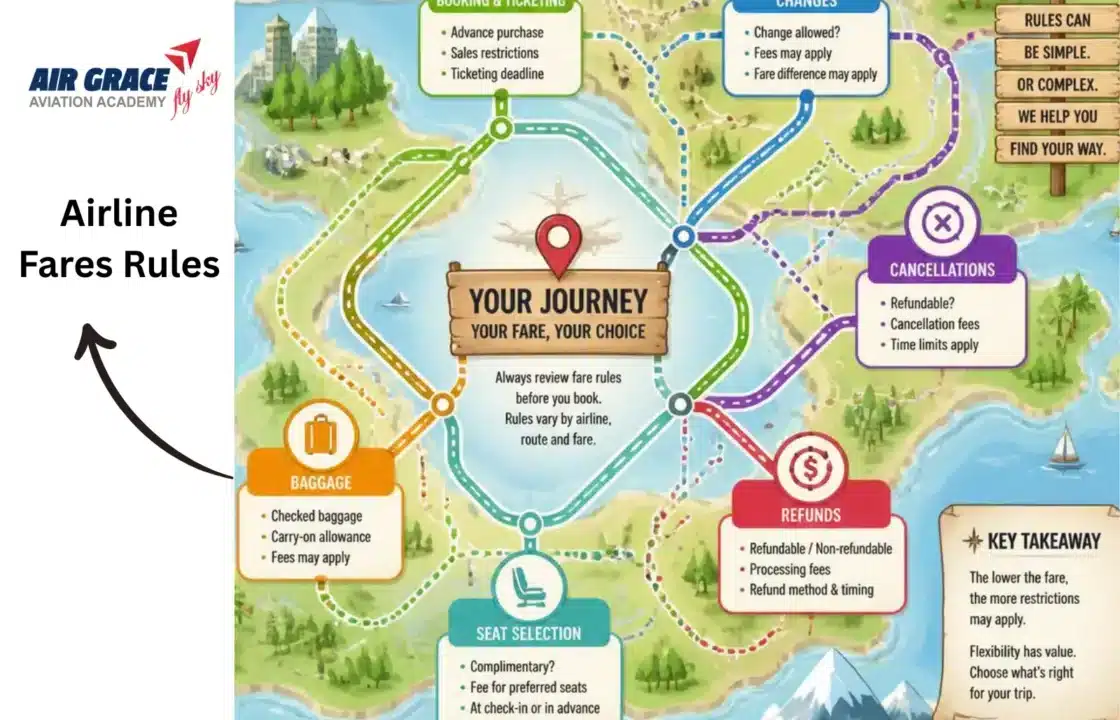
Airline Fare Rules: Everything You Need to Know Before Booking a Flight
Understanding airline fare rules is one of the most important skills for anyone working in the aviation and travel indus …
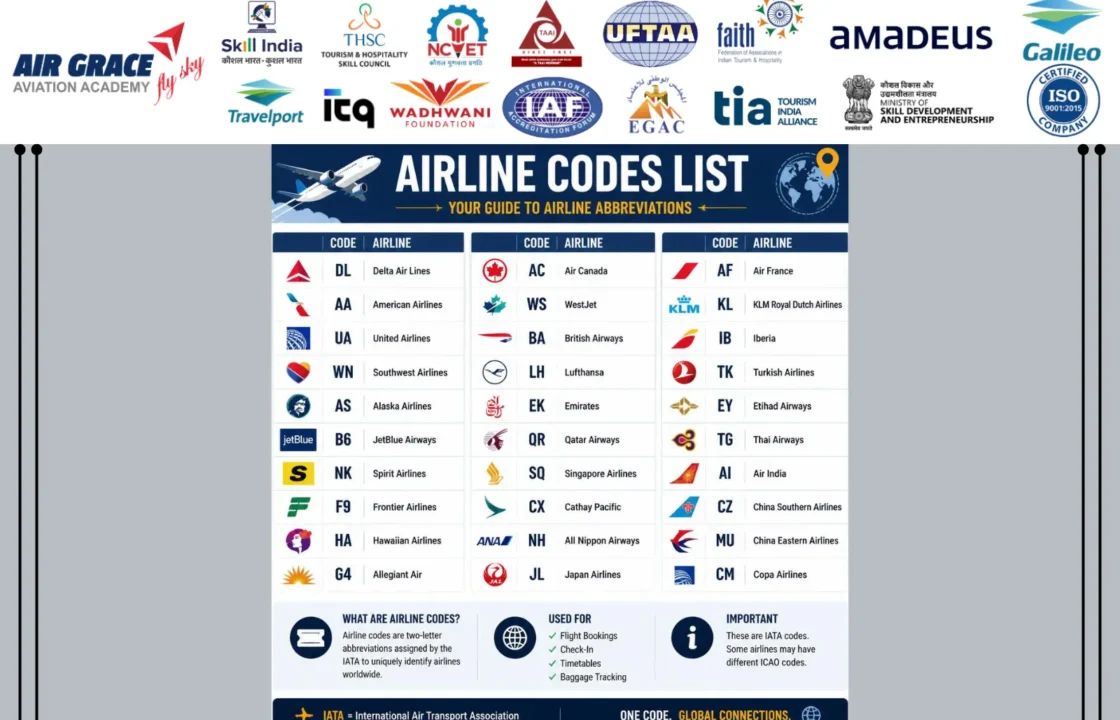
Airline Codes List
Complete IATA & ICAO Airline Codes Guide for Aviation & Travel Professionals If you have ever looked at an airlin …