Understanding the Purpose, Benefits, and Career Opportunities of IATA Training. If you’re wondering what the IATA course is for, this introduction will guide you through its main objectives and appeal.
If you are considering a career in aviation, travel, or tourism, you may have heard about IATA courses. A common question among students is: What is the IATA course for?
An IATA course is designed to prepare students and professionals for careers in the global travel and aviation industry. It provides industry-specific knowledge, practical skills, and an understanding of how airlines, airports, travel agencies, and tourism businesses operate.
Whether you dream of working for an airline, managing travel bookings, or starting your own travel agency, IATA training can help you build a strong foundation.
What Does IATA Stand For?
IATA stands for the International Air Transport Association, a globally recognized organization that represents airlines and supports international aviation standards.
IATA develops training programs that help individuals gain professional knowledge in various areas of the travel and aviation industry.
These programs are widely respected because they focus on real-world industry practices and operational standards.
What Is the IATA Course For?
The primary purpose of an IATA course is to provide students with the knowledge and skills needed to work in aviation, travel, and tourism-related professions.
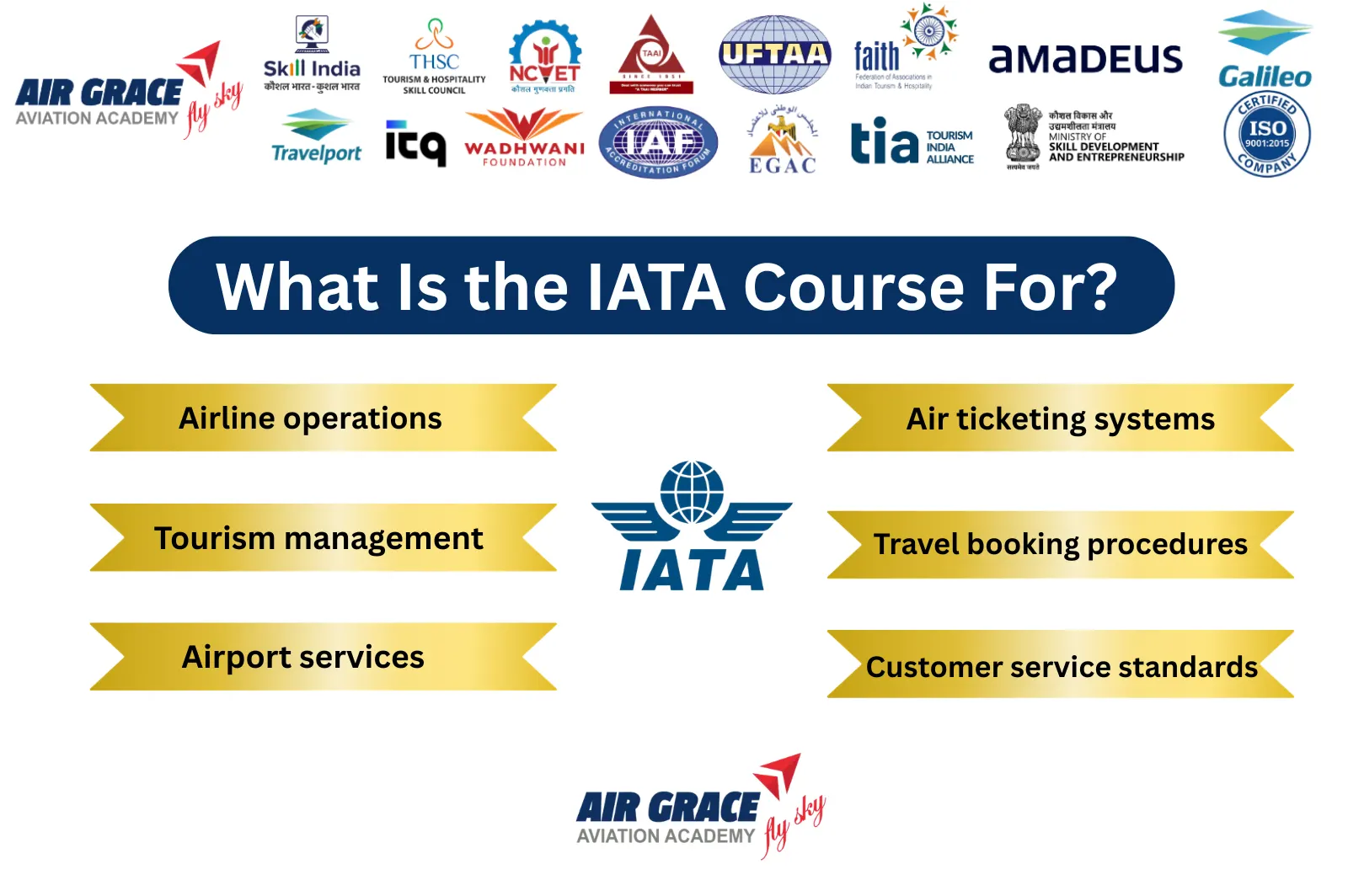
The course helps learners understand:
- Airline operations
- Travel booking procedures
- Air ticketing systems
- Tourism management
- Airport services
- Customer service standards
- Travel documentation processes
In simple terms, the course prepares students for professional roles within the travel and aviation sector.
Who Should Take an IATA Course?
Courses are suitable for a wide range of learners.
Students After 12th
Students looking for career-oriented training after school can use IATA courses as a pathway into the aviation industry.
Graduates
Graduates seeking specialized skills can improve their employability with professional aviation training.
Working Professionals
Individuals already working in travel or tourism can upgrade their knowledge and career prospects.
Travel Business Owners
Travel agency owners can gain a better understanding of industry operations and customer service practices.
What Do You Learn in an IATA Course?
The curriculum varies depending on the specialization, but most programs cover important travel and aviation concepts.
Airline Ticketing
Students learn how airline reservations and ticketing procedures work.
Topics may include:
- Flight bookings
- Fare calculations
- Ticket issuance
- Reservation modifications
- Refund procedures
Travel & Tourism Management
This area focuses on tourism operations and customer experiences.
Students learn:
- Tour planning
- Travel package creation
- Destination knowledge
- Tourism operations
- Travel coordination
Global Distribution Systems (GDS)
Many IATA-related programs include training on systems such as Amadeus.
Students gain practical experience in:
- Flight reservations
- Passenger Name Records (PNRs)
- Ticket management
- Travel itineraries
Customer Service Skills
Strong communication skills are essential in the travel industry.
Training often includes:
- Customer interaction
- Problem-solving
- Professional communication
- Service excellence
Benefits of Taking a Course
There are several reasons why students choose IATA training.
| Benefit | Description |
|---|---|
| Industry Knowledge | Learn how the aviation and travel industry operates |
| Career Development | Improve professional skills and employability |
| Practical Training | Gain hands-on industry exposure |
| Professional Recognition | Add value to your resume |
| Confidence Building | Develop workplace-ready skills |
Professional training helps students feel more prepared for industry challenges.
Career Opportunities After an IATA Course
An IATA course can open doors to various career paths.
Popular roles include:
- Airline Ticketing Executive
- Travel Consultant
- Reservation Executive
- Airport Customer Service Executive
- Tour Coordinator
- Travel Operations Executive
- Tourism Consultant
These roles can be found in airlines, travel agencies, tourism companies, airports, and hospitality organizations.
Is an IATA Course Worth It?
For students interested in aviation and travel, an IATA course can be a valuable investment in professional development.
The course helps learners:
- Build industry-specific knowledge
- Understand airline and travel operations
- Improve communication skills
- Increase career opportunities
- Gain confidence for interviews and workplace responsibilities
The value of the course often depends on the quality of training and the effort students put into learning.
How to Choose the Right IATA Course
Before enrolling, consider the following:
Course Curriculum
Ensure the course covers industry-relevant topics.
Practical Exposure
Look for programs that include hands-on training.
Experienced Trainers
Learn from professionals with industry experience.
Career Support
Institutes offering placement assistance can provide additional value.
Start Your Aviation Journey Today
If you are passionate about aviation, travel, and tourism, an IATA-related course can help you develop the skills needed to succeed in the industry.
At Air Grace Aviation Academy, students receive practical training, industry-focused learning, and career guidance to help them achieve their professional goals.
Explore Our Aviation & Travel Programs
- IATA Air Ticketing
- Travel & Tourism Management
- Amadeus GDS Training
- Visa Management
- Aviation & Hospitality Courses
Enroll Today
Explore more on our Instagram page
🌐 Visit: https://airgraceacademy.com
Fill the form below for admissions, fee details, and upcoming batch information.
Frequently Asked Questions (FAQs)
What is the IATA course for?
An IATA course is designed to prepare students for careers in aviation, travel, tourism, airline ticketing, and related industries.
Can I take an IATA course after 12th?
Yes. Many IATA-related programs are open to students who have completed their 12th-grade education.
Does an IATA course include practical training?
Many professional institutes include practical learning, reservation systems training, and industry-based exercises.
What jobs can I get after completing an IATA course?
Career options include Airline Ticketing Executive, Travel Consultant, Reservation Executive, Airport Customer Service Executive, and Tourism Coordinator.

Related posts
What is GDS? Complete Guide to the Global Distribution System in the Travel & Aviation Industry (2026)
What is GDS? If you have ever booked a flight through a travel agency, compared airline fares online, or wondered how tra …
How to Get a Travel Agency License in India (2026): Complete Registration & Legal Guide
How to Get a Travel Agency License in India Starting a travel agency in India is an exciting business opportunity. If you …